Planning A Kitchen Garden: Site and Design
By Pamela Page
The easiest way to grow vegetables is to drive to the closest nursery and buy baby vegetable plants. It is not, however, the cheapest way. The most cost effective method for growing vegetables is to plant seeds directly into the ground.
Once your soil has reached 60 degrees – or if you don’t own a soil thermometer – once your neighbors appear with seed packets in their gardens – it’s time to get sowing. But first, you need a plan.
Remember, “Little Miss Mary, quite contrary, how does your garden grow?” If Mary’s garden didn’t have at least six to eight hours of direct sunlight daily, the answer would have to be: “Not so well.” “Location. Location. Location?” I say, “Site, site, site.”
You will need a fence. Otherwise, you’ll be feeding not only you and your family, but other animals as well.
How large should you make your kitchen garden? That depends on how many mouths you have to feed, what you decide to grow and how much time you have to devote to the cause. If you get it right, a 20 x 20 foot garden can feed a family of four all year round.
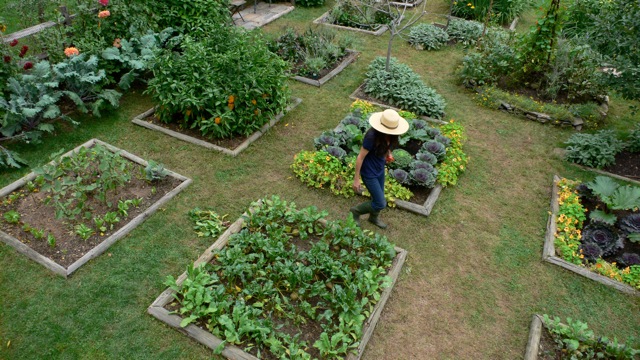
Building raised beds will give you a head start in short season Northern climates. Buying pre-made raised beds is expensive. If you make them yourself, do not use pressure-treated lumber! My raised beds, made from cedar and black locust, measure six by six feet, and I can reach into them comfortably.
Once you’ve finalized your plan, it’s time to prepare the soil. If you’re making a garden in a lawn for the first time, you’ll need to cut into the grass, turn it over and wait a few weeks until the grass decomposes. Then dig the bed to a depth of 8 to 12 inches and remove all of the rocks, stones etc. Finally, add a 2-inch layer of compost and dig it in lightly to give the soil the nutrients it needs. Initially, you’ll have to buy your compost, but eventually, you can make your own, the most cost-effective way to feed the soil that feeds you. Composting lesson coming soon.
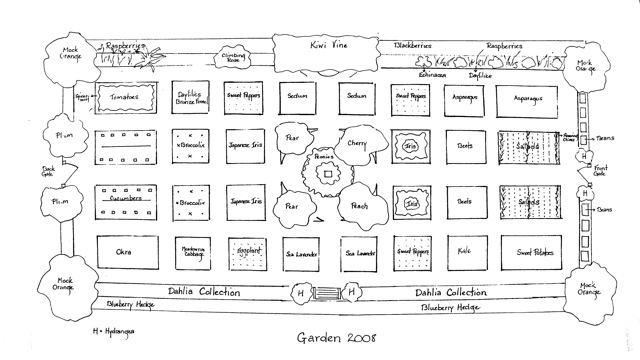
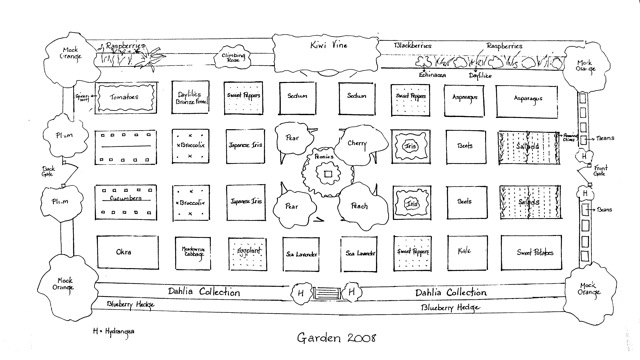
A lot of the fun of a kitchen garden is not only in designing it, but in planting it. Who says you have to plant in traditional American rows? I plant in symmetrical squares, diamonds and spirals.
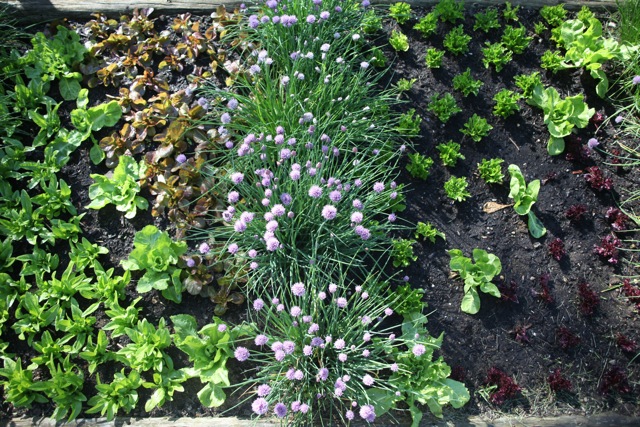
I got the idea from an ancient people, the Egyptians, who, having more time than we do, realized that symmetry was relaxing to the eye, and that symmetrically planted kitchen gardens could be good, not only for food, but also for looking at and “de-stressing” in – only they didn’t have that word back then.
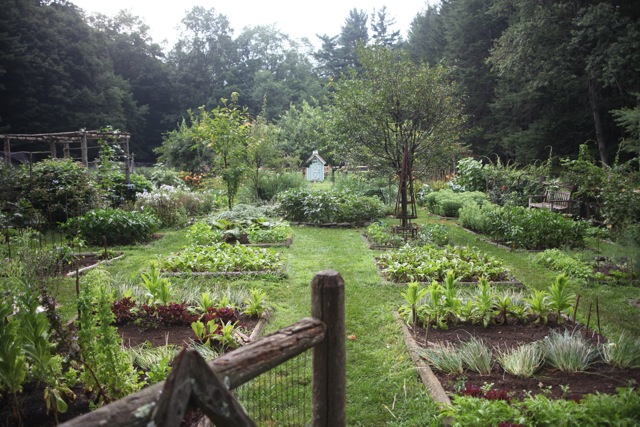
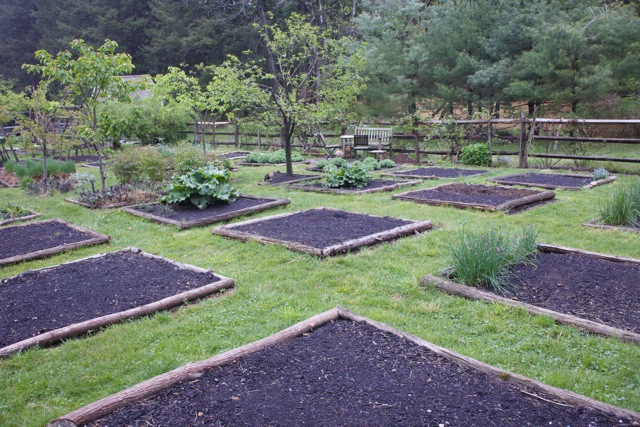
Following another Egyptian tradition, I plant a single variety of a chosen vegetable in each bed.

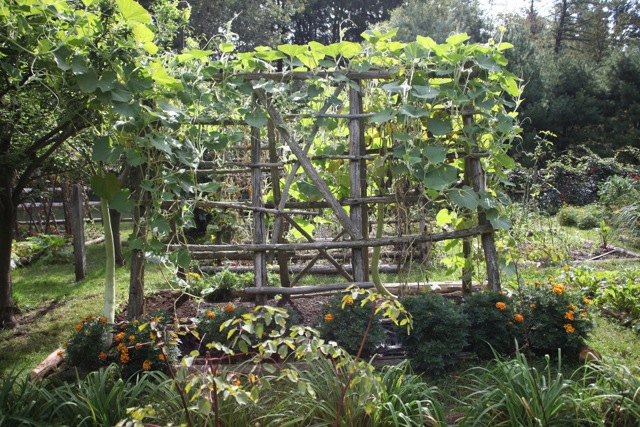
And to save space and preserve my produce, I grow many vegetables on homemade cedar trellises.
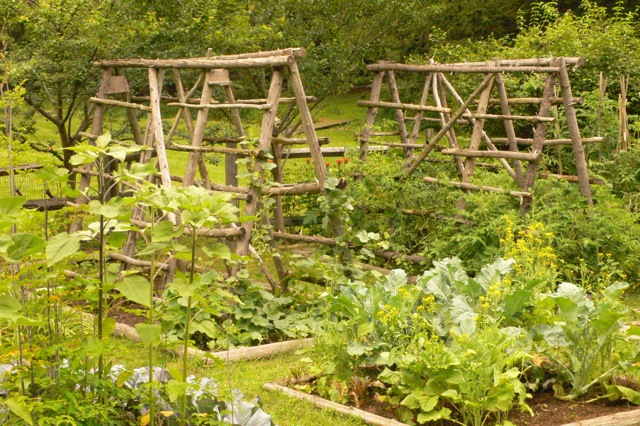
Whether your garden is great or small, use your imagination. And as the Egyptians did, make your garden a place that you can work, eat or sleep in, because once you get the hang of it, like me, that’s exactly what you’ll be doing there!